The Stories Behind San Francisco’s Most Famous Landmarks
Every great city has a skyline, but San Francisco has a personality. The bridges, towers, and painted rooftops you recognize from postcards are not just pretty backdrops. Each one carries a story of ambition, disaster, reinvention, or sheer stubbornness. Digging into San Francisco landmarks history turns a sightseeing checklist into something far more memorable, because you stop seeing objects and start seeing the people who fought to build them.
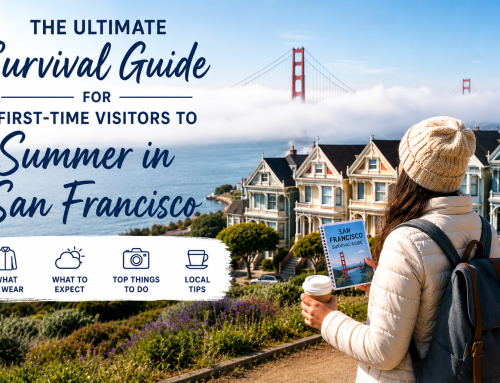
If you are planning a trip to San Francisco, this guide gives you the context that makes each stop land-harder. For first-time-visitors especially, knowing why a landmark exists often matters more than the photo you take in front of it. Here are the stories behind the icons that made this city famous.
The Golden Gate Bridge: A Span Everyone Said Was Impossible
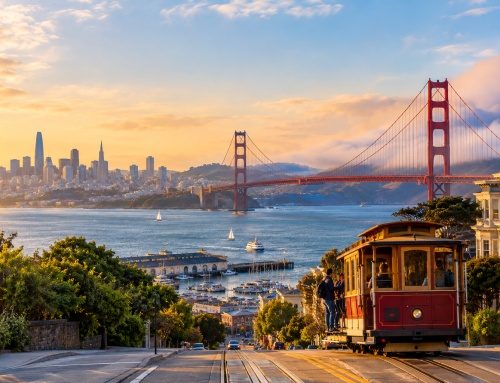
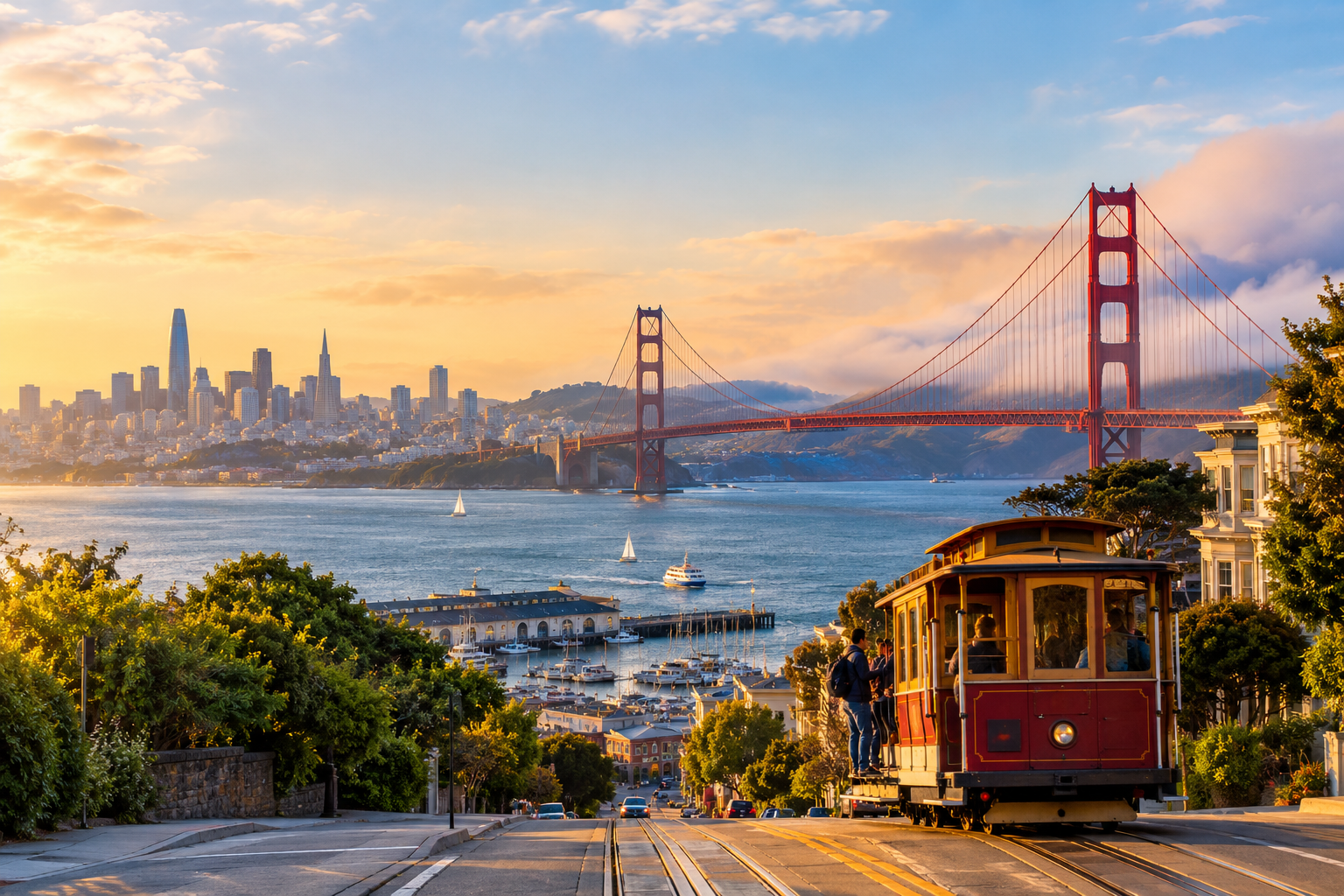
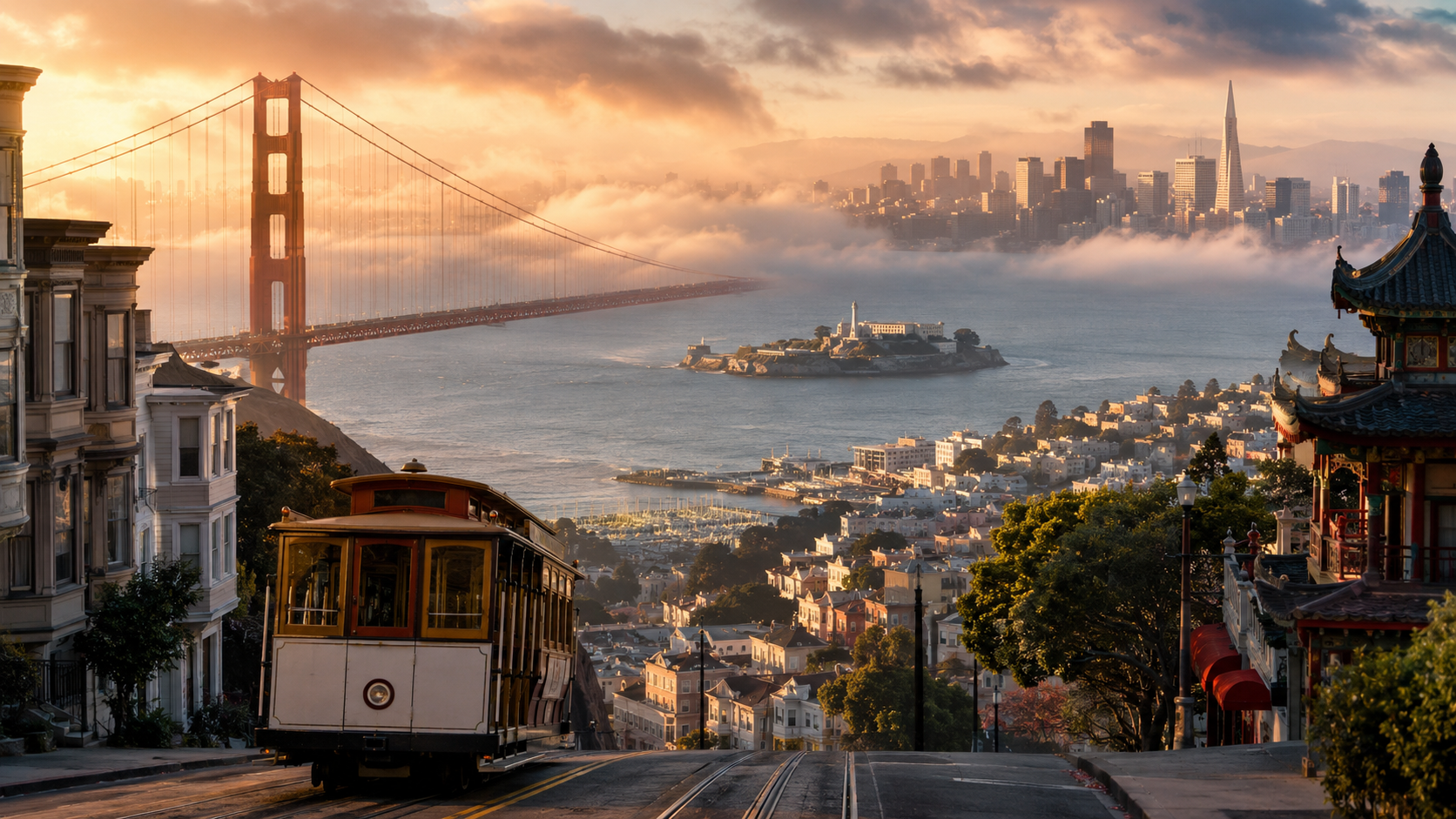
No structure defines the city more than the Golden Gate Bridge. Today it looks inevitable, but in the 1920s the idea was widely dismissed as reckless. Engineers argued that the strait was too deep, the currents too violent, and the fog too constant for any bridge to survive. The military worried it would obstruct the harbor, and ferry operators fought it because it threatened their business.
Chief engineer Joseph Strauss pushed the project forward anyway, though the elegant design owed a great deal to Leon Moisseiff, Charles Ellis, and Irving Morrow. Construction began in 1933 during the Great Depression, which meant the bridge was as much an economic lifeline as an engineering feat. It opened in 1937, and that famous International Orange color was not a random choice. Morrow selected it because it complemented the natural surroundings and stayed visible in heavy fog.
One detail that surprises people is the safety net strung beneath the deck during construction. It saved nineteen workers who fell, and they formed an informal club called the Halfway to Hell Club. For a project of that era, the safety record was remarkable, and it reflected a shift in how large builds treated the lives of the men doing the work.
Alcatraz Island: From Fortress to America’s Most Famous Prison
Sitting in the middle of the bay, Alcatraz has worn several identities. It started as a military fortification in the 1850s, then became a military prison, and finally the federal penitentiary that cemented its legend from 1934 to 1963. The isolation that made it useless for almost anything else made it perfect for holding the country’s most difficult inmates, including Al Capone and George Kelly.
The cold water and strong currents were the real walls. Officially, no one ever confirmed a successful escape, though the 1962 attempt by Frank Morris and the Anglin brothers remains one of the great unsolved mysteries in American criminal history. The men were never found, and whether they drowned or vanished into a new life is still debated.
Alcatraz gained a second layer of meaning in 1969, when a group of Native American activists occupied the island for nineteen months. Their protest drew national attention to Indigenous rights and remains one of the most significant moments of the movement. When you visit today, you are walking through both a prison and a landmark of civil resistance.
The Painted Ladies: Survivors of Fire and Fashion
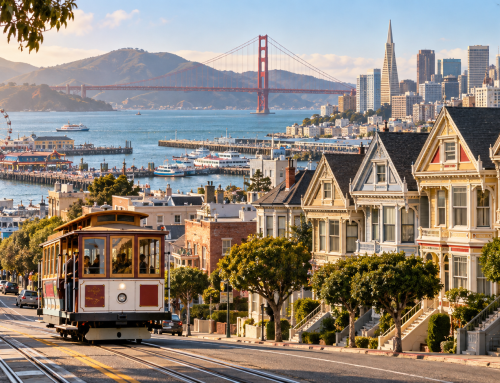
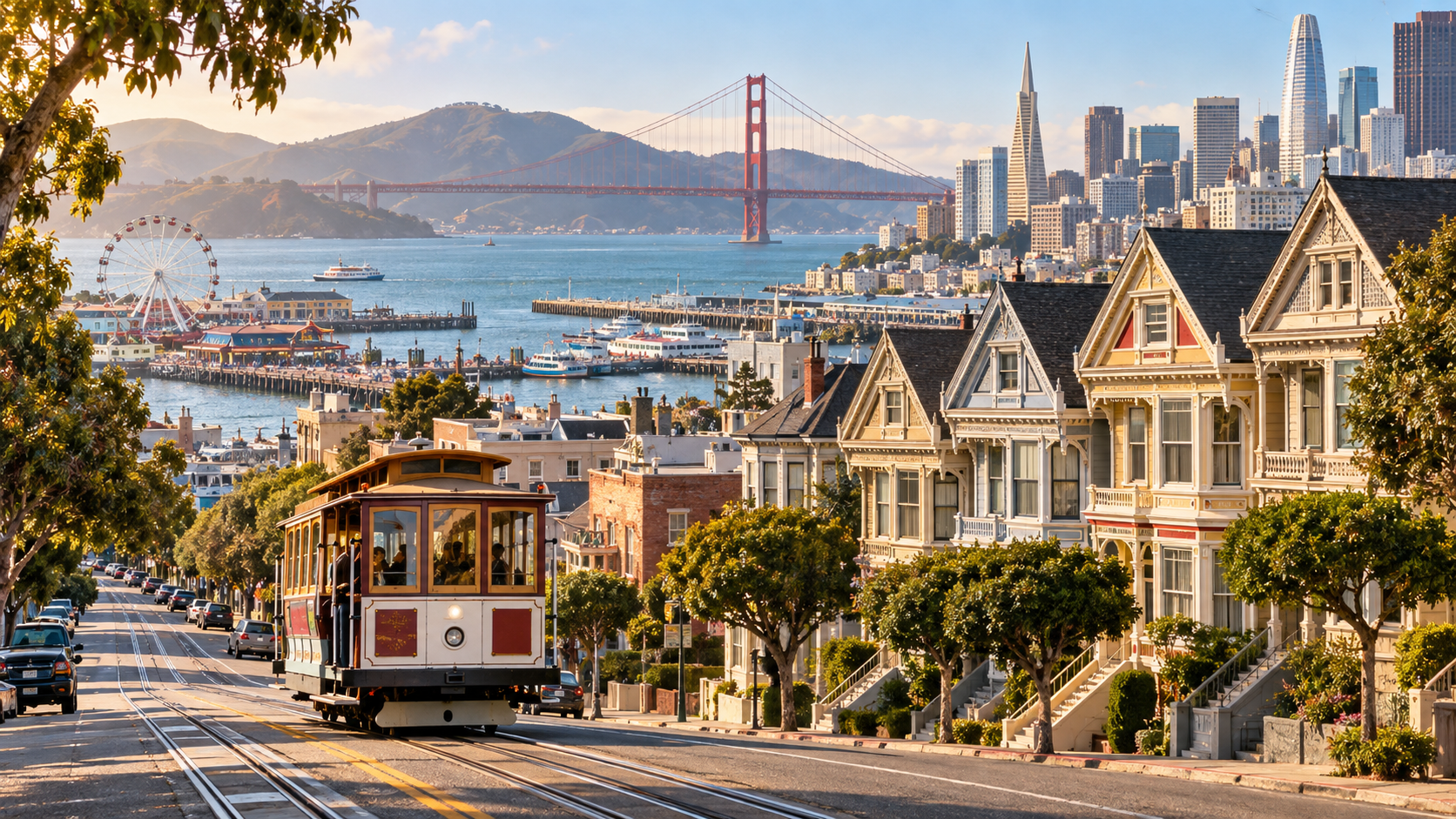
The row of colorful Victorian homes at Alamo Square, known as the Painted Ladies, looks almost too charming to have a dramatic backstory. Yet these houses are survivors. San Francisco once had tens of thousands of Victorian homes, and the 1906 earthquake and fire destroyed a staggering number of them along with much of the city.
The homes that remained fell out of fashion for decades, and many were painted plain gray with surplus battleship paint during the world wars. The vivid color schemes you see now emerged from a 1960s and 1970s movement called the Colorist movement, when owners began restoring the ornate detailing and celebrating it with bold palettes. The postcard view, with the modern skyline rising behind the old rooftops, captures the whole story of the city in a single frame.
Coit Tower: A Gift Wrapped in a Firefighter Legend
Perched on Telegraph Hill, Coit Tower was funded by Lillie Hitchcock Coit, an eccentric heiress who left money to beautify the city she loved. A popular myth claims the tower was designed to resemble a fire hose nozzle, a nod to Lillie’s lifelong devotion to the city’s volunteer firefighters. Historians dispute the fire hose theory, but the story stuck because it fit her personality so well.
Inside, the tower holds something many visitors overlook: a series of Depression-era murals painted in 1934 under a federal arts program. The murals depict California workers and daily life, and some were controversial at the time for their political themes. They are a snapshot of a nation trying to find its footing, hidden inside a monument that most people climb simply for the view.
Lombard Street: The Crooked Icon With a Practical Origin
Lombard Street is often called the crookedest street in the world, though that title is technically disputed. Its eight sharp turns were not built as a tourist attraction. The hill was simply too steep for cars and pedestrians to navigate safely, so in 1922 the switchback design was introduced to reduce the grade. Function created one of the most photographed streets in iconic San Francisco, a reminder that the city’s dramatic terrain shaped almost everything about how it was built.
The Cable Cars: A Rescue Mission on Wheels
The cable cars are the only moving National Historic Landmark in the country, and they exist because of a tragedy. In 1869, Andrew Hallidie reportedly watched horses slip and die while dragging a heavy carriage up a wet cobblestone hill. He set out to build a system that could climb the city’s punishing slopes without relying on animals, and by 1873 the first line was running.
At their peak, cable cars covered the city with hundreds of cars across many lines. The rise of buses and streetcars nearly ended them entirely, and it took a determined citizen campaign in the 1940s, led by Friedel Klussmann, to save the system. Today they survive as both working transit and living history, which is exactly why riding one belongs on any trip to San Francisco.
The Ferry Building: From Transit Hub to Culinary Heart
Before the bridges existed, nearly everyone entering San Francisco arrived by ferry, and the Ferry Building was one of the busiest transit terminals in the world. Its clock tower, completed in 1898, survived the 1906 earthquake and became a symbol of the city’s resilience. As bridges and cars reduced ferry traffic, the building faded, and for years an elevated freeway even cut it off from the waterfront.
The 1989 Loma Prieta earthquake damaged that freeway, and its removal gave planners a chance to restore the building and reconnect it to the bay. Today it thrives as a marketplace and food hall, a case study in how San Francisco tends to turn disaster into reinvention. Wander the stalls on a market day and you are standing inside a landmark that has quietly reinvented itself three separate times.
The Palace of Fine Arts: Built to Be Temporary
Few buildings in the city are as romantic as the Palace of Fine Arts, with its towering rotunda reflected in a still lagoon. What most visitors do not realize is that it was never meant to last. It was constructed for the 1915 Panama Pacific International Exposition, a world’s fair held to announce that San Francisco had fully recovered from the 1906 earthquake. Almost every structure at the fair was designed to be demolished afterward, built from cheap plaster and burlap rather than stone.
The Palace proved so beloved that residents refused to let it go. It slowly crumbled over the following decades until a wealthy patron and a public campaign funded a complete reconstruction in the 1960s using durable materials. The building you see today is essentially a permanent copy of a temporary one, preserved purely because the city fell in love with it. That story alone makes it one of the more poetic entries in San Francisco landmarks history.
The Transamerica Pyramid: The Tower That Divided a City
When it was completed in 1972, the Transamerica Pyramid was deeply controversial. Critics hated its unconventional shape and argued it clashed with the city’s character. Yet within a generation it became the most recognizable building on the skyline and an unmistakable symbol of iconic San Francisco. The tapered design was actually practical, allowing more light and air to reach the streets below than a conventional boxy tower would. It is a reminder that many beloved landmarks were once the bold, divisive projects of their day, which should make anyone think twice before dismissing the next big idea.
Why These Stories Matter to Your Visit
The thread running through San Francisco landmarks history is resilience. Earthquakes, fires, economic collapse, and shifting technology all threatened to erase these places, and each one survived because people refused to let them go. That is the real character of the city, and it is why the landmarks feel alive rather than frozen.
For first-time visitors, the best approach is simple. Do not just photograph the Golden Gate Bridge and move on. Stand there for a minute and picture the workers on that safety net, the ferry operators who fought the project, and the fog that everyone swore would win. Once you know the stories, every landmark in the city stops being a stop on a list and starts being a chapter in one of America’s most fascinating urban histories.